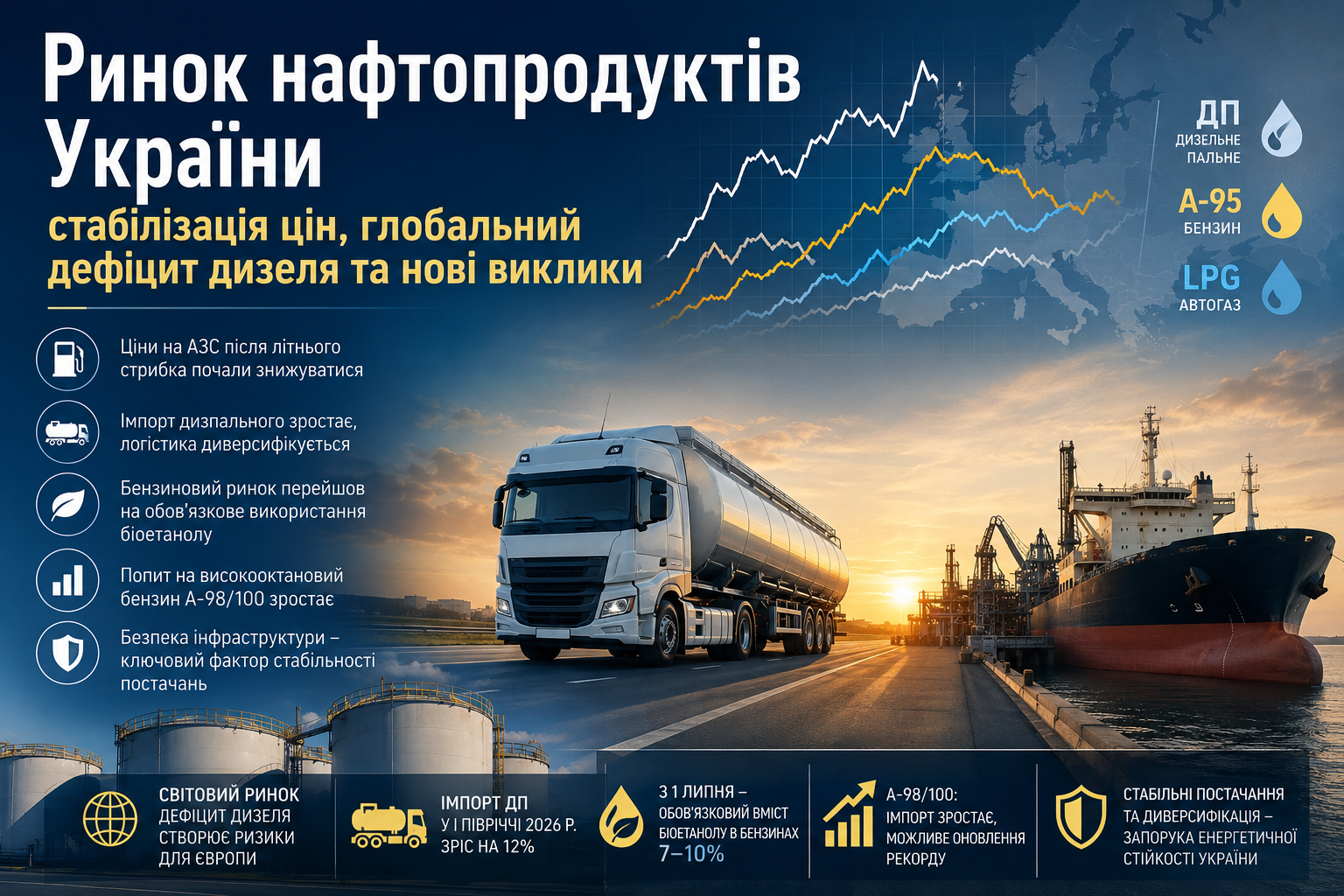
Ukraine’s oil products market is showing the first signs of stabilization in August after a sharp increase in fuel prices over the summer. Retail prices for gasoline, diesel fuel and LPG have declined slightly in recent days, although the global market remains under pressure. The main risk for Ukraine is a reduction in global diesel supply and a possible worsening of the resource shortage in Europe ahead of the heating season.
Diesel Remains the Main Risk Factor
Following a sharp increase in prices in June–July, the European diesel market is once again showing an upward trend. According to Enkorr, the price of diesel on ICE Futures Europe has increased by almost 40% from the minimum level recorded on June 18. One of the reasons is reduced supply amid attacks on refining infrastructure and geopolitical instability.
Analysts are already warning of the risk of a difficult situation in the European diesel market in autumn and winter. Declining global supply, including disruptions at refineries, is creating conditions for renewed price pressure.
This is particularly important for Ukraine, as the domestic market is heavily dependent on imported supplies. Any reduction in available volumes in Europe or a sharp increase in benchmark prices directly affects the cost of fuel procurement in Ukraine.
Diesel Imports Continue to Grow
Despite challenging international market conditions, Ukraine increased diesel imports by 12% in the first half of 2026, reaching more than 3 million tonnes.
At the same time, the geography of supplies has changed: imports have become more diversified, while deliveries through the western border continue to play a key role. According to an A-95 study, supplies via the Polish route increased by 58% in the first half of the year, reaching approximately 1.3 million tonnes.
This highlights an important feature of the Ukrainian fuel market — its ability to quickly restructure logistics in response to changes in the external environment.
At the same time, increased imports do not automatically mean lower prices. If global supply declines faster than Ukrainian importers can increase purchases, fuel prices remain high.
AT Energo Trade Among the Four Largest Diesel Importers
Against the backdrop of active replenishment of the Ukrainian market with diesel fuel, the position of major importers is strengthening. In July 2026, diesel fuel was supplied to Ukraine by 134 companies, while total imports amounted to approximately 562,000 tonnes — 5% more than in July last year.
AT Energo Trade ranked among the four largest diesel fuel importers in Ukraine, supplying 50,700 tonnes during the month, or approximately 9% of total diesel imports in July. In terms of import volume, the company ranked fourth among all market participants. This result demonstrates the company’s stable presence among key fuel suppliers to the Ukrainian market and its role in meeting domestic demand. Overall, the five largest importers supplied approximately 280,000 tonnes of diesel fuel in July — almost half of all foreign supplies.
The Gasoline Segment Adapts to New Rules
Another important change in 2026 was the transition of the Ukrainian gasoline market to mandatory bioethanol use.
Since July 1, Ukraine has required gasoline to contain more than 7% bioethanol, within the 7–10% range. In June, market participants actively increased purchases of A-95 E10 gasoline in preparation for the new requirements.
According to NaftoRynok, by July, 93.5% of imported A-95 gasoline contained bioethanol. Thus, the Ukrainian market has effectively completed the transition from conventional gasoline to ready-made blended products. For the market, this means not only a change in fuel composition but also a restructuring of supply chains. Importers need to take the new requirements into account when negotiating contracts, selecting producers and planning deliveries.
Growing Demand for High-Octane Gasoline and the Most Flexible Segment of the Fuel Market — LPG
Another fuel market trend is the increase in imports of A-98/100 gasoline. According to Enkorr, Ukraine imported almost 20,000 tonnes of this fuel in the first half of 2026 — 12% more than during the same period last year. If this trend continues, annual imports of high-octane gasoline could reach a new record. This indicates the gradual expansion of the premium segment even amid high fuel prices and economic uncertainty.
Unlike diesel and gasoline, LPG has demonstrated more favorable price dynamics in recent months. According to NaftoRynok, the average retail price of LPG declined in July, while in August some market operators continued to reduce prices.
Fuel Infrastructure Security Becomes Part of Market Stability
For Ukraine’s fuel market in 2026, price levels can no longer be considered separately from the physical availability of fuel.
Russian attacks on filling stations and other fuel infrastructure have become a systemic risk factor. In July, the government held a separate coordination meeting with market operators regarding supply stability and emphasized that the country currently has sufficient fuel volumes.
At the same time, in some communities where filling stations have been damaged or destroyed, alternative methods of fuel distribution are already being discussed. In particular, communities have proposed allowing fuel to be sold directly from tanker trucks, provided the appropriate licenses are in place. This could become one of the new elements of fuel infrastructure in frontline and affected regions.
What Awaits the Ukrainian Market in Autumn?
he coming months will remain a period of high uncertainty for Ukraine’s fuel market. On the one hand, the domestic market has sufficient fuel volumes, while imports continue to grow and diversify. On the other hand, the global diesel market is entering a more challenging period, and European supply is becoming more expensive.
The key factors influencing prices in autumn will be:
– the dynamics of European diesel benchmarks;
– fuel availability in Europe;
– the situation with refinery operations and global supplies;
– the hryvnia exchange rate;
– logistics costs;
– the security situation in Ukraine;
– seasonal growth in diesel demand;
– importers’ ability to build up inventories in a timely manner.
Ukraine’s market remains adequately supplied with fuel, but the external environment is becoming more challenging. This is particularly true for the diesel segment, where a reduction in global supply could create additional pressure on procurement prices in the coming months.
For market participants, this means one thing: stable supplies, diversified import sources and reliable logistics will be no less important in autumn than the price of the resource itself.